

Gear puller tools are essential in various industries, especially in automotive repair and machinery maintenance. They are used to remove gears, pulleys, bearings, and other components from shafts without causing damage. The materials used in the construction of gear puller tools play a crucial role in their performance, durability, and overall quality. As a gear puller tools supplier, I have in - depth knowledge of the different materials employed in these tools, and I'll share this information with you.
Carbon Steel
Carbon steel is one of the most commonly used materials for gear puller tools. It is an alloy of iron and carbon, with carbon content typically ranging from 0.05% to 2.1%. This material is highly favored due to its relatively low cost and good mechanical properties.
The high carbon content in carbon steel gives it excellent hardness. Hardness is a critical property for gear pullers because they need to withstand high forces during the pulling process. When removing a stubborn gear or bearing, the jaws of the puller must be able to grip firmly without deforming. Carbon steel's hardness ensures that the puller can maintain its shape and perform effectively over multiple uses.
However, carbon steel also has some drawbacks. It is prone to rusting, especially in humid or corrosive environments. To mitigate this issue, many carbon - steel gear pullers are coated with a protective layer. For example, some are painted, while others are galvanized. These coatings act as a barrier between the steel and the surrounding environment, preventing moisture and oxygen from reaching the metal surface and causing corrosion.
We offer several gear puller tools made of carbon steel, such as our Wood Packaging Hydraulic Bearing Puller. This puller is designed for heavy - duty applications and the carbon - steel construction provides the necessary strength and durability.
Alloy Steel
Alloy steel is another popular choice for manufacturing gear puller tools. It is made by adding various alloying elements to carbon steel, such as chromium, nickel, molybdenum, and vanadium. These additional elements enhance the steel's properties, making it stronger, more durable, and more resistant to wear.
One of the main advantages of alloy steel is its high strength - to - weight ratio. This means that gear pullers made from alloy steel can be lighter than those made from carbon steel while still providing the same or even greater strength. Lighter tools are easier to handle, especially in tight spaces or when working overhead.
Alloy steel also has excellent toughness. Toughness is the ability of a material to absorb energy and deform plastically before fracturing. In the context of gear pullers, toughness is important because it allows the tool to withstand sudden impacts or overloads without breaking. For example, if a user accidentally applies too much force during the pulling process, an alloy - steel puller is less likely to crack or shatter compared to a carbon - steel one.
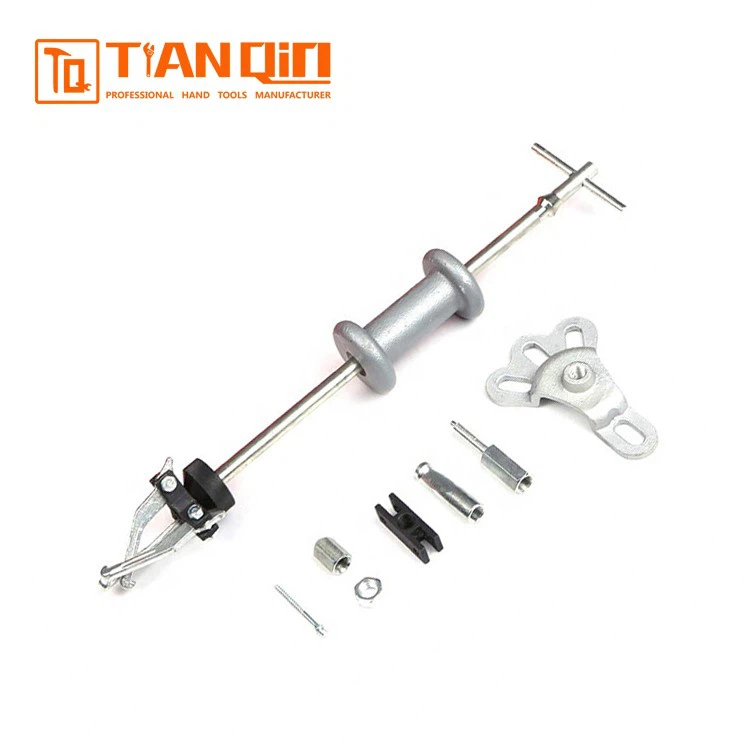
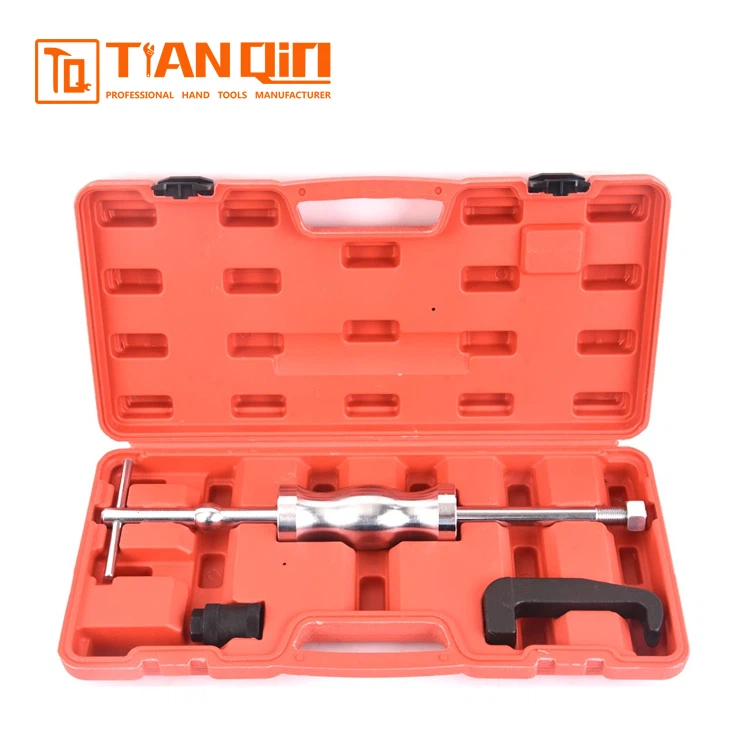
Our 3Pcs Injector Extractor is crafted from high - quality alloy steel. The alloy - steel construction ensures that the extractor can handle the high - pressure and high - torque requirements of injector removal, providing reliable performance in automotive repair shops.
Tool Steel
Tool steel is a specialized type of steel that is specifically designed for use in tools. It is known for its extreme hardness, wear resistance, and heat resistance. These properties make it an ideal material for gear puller tools, especially those used in high - precision or high - stress applications.
The high hardness of tool steel allows gear pullers to cut through tough materials and grip components firmly. For example, when removing a gear that has been pressed onto a shaft with a large interference fit, a tool - steel puller can apply the necessary force without dulling or deforming.
Tool steel's wear resistance ensures that the puller's jaws and other working parts maintain their sharpness and accuracy over a long period of time. This is particularly important in industrial settings where gear pullers are used frequently.
Heat resistance is also a significant advantage of tool steel. During the pulling process, friction can generate a significant amount of heat. Tool steel can withstand this heat without losing its hardness or strength, ensuring consistent performance even under demanding conditions.
Our 17pcs Slide Hammer Puller Set features components made from tool steel. The set is designed for a wide range of pulling tasks, and the tool - steel construction guarantees long - lasting performance and reliability.
Cast Iron
Cast iron is a material that has been used in tool manufacturing for a long time. It is made by melting iron and adding small amounts of carbon and silicon. Cast iron is known for its excellent castability, which means it can be easily formed into complex shapes.
One of the main advantages of cast iron in gear puller tools is its high damping capacity. Damping capacity refers to the ability of a material to absorb and dissipate energy. In the context of gear pullers, this means that cast - iron tools can reduce vibrations during the pulling process. Reduced vibrations not only make the tool more comfortable to use but also help to prevent damage to the components being removed.
Cast iron also has good corrosion resistance compared to some steels. It forms a protective oxide layer on its surface, which helps to prevent rusting. However, it is not as corrosion - resistant as some of the coated steels or stainless steels.
Some of our more heavy - duty gear puller models use cast - iron components. The cast - iron parts provide stability and strength, making these pullers suitable for large - scale industrial applications.
Stainless Steel
Stainless steel is a popular choice for gear puller tools, especially in applications where corrosion resistance is a major concern. It is an alloy of iron, chromium, and nickel. The chromium in stainless steel forms a thin, invisible layer of chromium oxide on the surface of the metal, which protects it from corrosion.
Stainless - steel gear pullers are ideal for use in marine environments, food processing industries, or any other environment where exposure to moisture, chemicals, or saltwater is common. They can also be used in applications where cleanliness is important, as stainless steel is easy to clean and sanitize.
In addition to its corrosion resistance, stainless steel also has good strength and durability. It can withstand the forces required for gear and bearing removal, making it a reliable choice for a variety of pulling tasks.
We offer a range of stainless - steel gear puller tools that are suitable for different industries and applications. These tools provide long - term performance and require minimal maintenance.
Conclusion
In conclusion, the choice of material for gear puller tools depends on various factors, including the application, the environment in which the tool will be used, and the budget. Carbon steel is a cost - effective option with good hardness but requires protection against rust. Alloy steel offers high strength - to - weight ratio and toughness. Tool steel is ideal for high - precision and high - stress applications due to its extreme hardness and wear resistance. Cast iron provides good damping capacity and castability, while stainless steel is the go - to material for corrosion - prone environments.
As a gear puller tools supplier, we are committed to providing high - quality products made from the best materials. Our diverse range of gear puller tools, including the Wood Packaging Hydraulic Bearing Puller, 3Pcs Injector Extractor, and 17pcs Slide Hammer Puller Set, are designed to meet the needs of different customers.
If you are in the market for gear puller tools, we invite you to contact us for more information and to discuss your specific requirements. Our team of experts is ready to assist you in finding the right tools for your applications.
References
- ASM Handbook Committee. (2008). ASM Handbook Volume 1: Properties and Selection: Irons, Steels, and High - Performance Alloys. ASM International.
- Callister, W. D., & Rethwisch, D. G. (2014). Materials Science and Engineering: An Introduction. Wiley.
- Shackelford, J. F. (2016). Introduction to Materials Science for Engineers. Pearson.